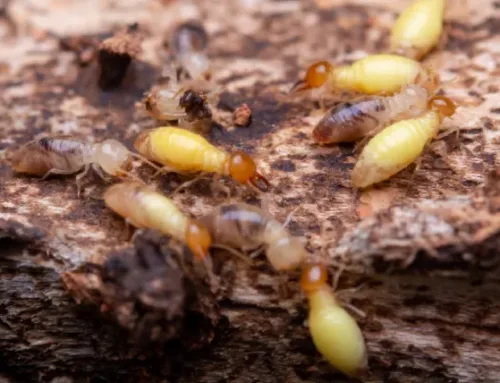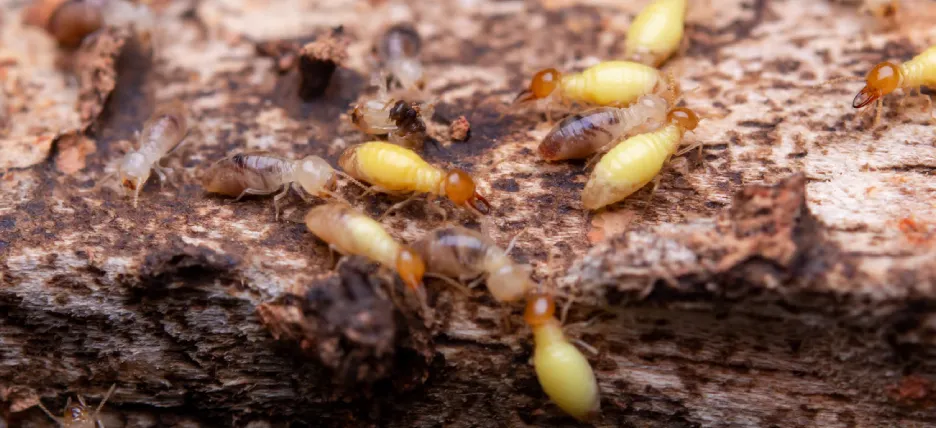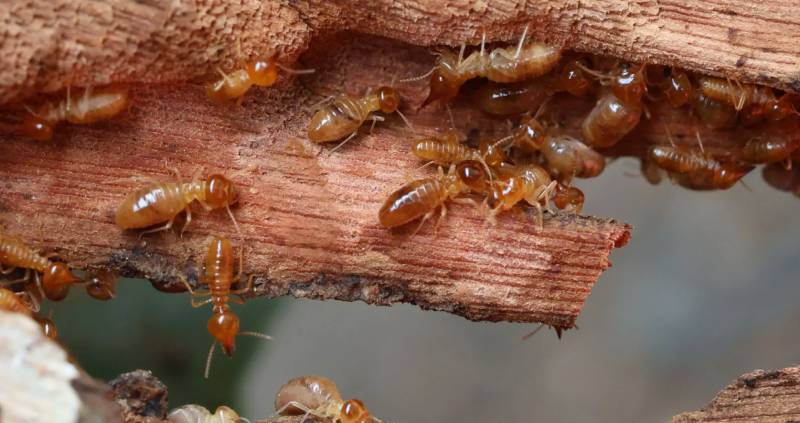
Termites are often called the “silent destroyers” for good reason. These small insects work quietly behind walls, floors, and foundations—sometimes for years—before homeowners notice the damage. In this blog, we’ll break down the hidden dangers of a termite infestation, from structural and financial risks to health and safety concerns, and explain what you can do to protect your home. If you live in Austin and suspect termites, here’s what you need to know.
Stop termites before they cause damage. We offer termite control across Austin, Dripping Springs, Bee Cave, Lakeway, Round Rock, Buda, and Kyle.
Understanding Termites — Why They’re a Threat
Termites survive by eating cellulose, the main component in wood and plant matter. In Austin, the two most common types are subterranean termites, which live underground and enter homes through mud tubes, and drywood termites, which live directly inside wooden structures. Because termites eat wood from the inside out, they often remain undetected until significant damage has already occurred (WebMD).
Structural & Financial Risks of a Termite Infestation
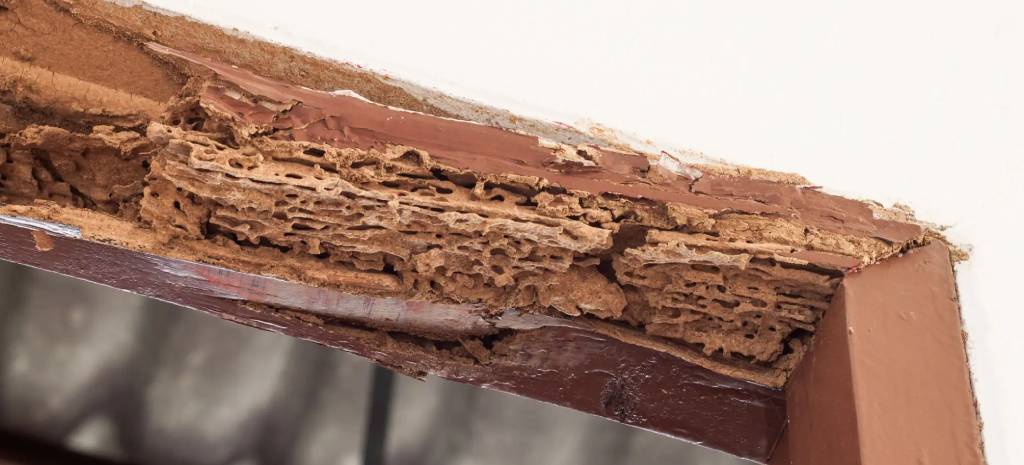
Hidden Structural Damage
One of the greatest dangers of termites is their ability to weaken the core structure of your home. They hollow out wooden beams, floor joists, and walls, leaving behind fragile shells that can cause sagging floors, cracked walls, or even risk of collapse if left untreated. In some cases, termites can also cause secondary issues such as plumbing leaks or water damage.
Insurance & Repair Challenges
While termites can cause severe damage, most homeowners are surprised to learn that insurance policies often exclude termite destruction. This means repair and treatment expenses fall directly on the homeowner (Better Homes & Gardens). Acting early can save time, stress, and money down the road.
Decline in Property Value & Resale Challenges
A history of termites can reduce a home’s market value. Appraisers may lower property value, and many states require disclosure of past infestations during resale. Buyers often view termite damage as a major red flag.
Health, Safety & Secondary Risks
Respiratory Irritation, Allergies & Asthma
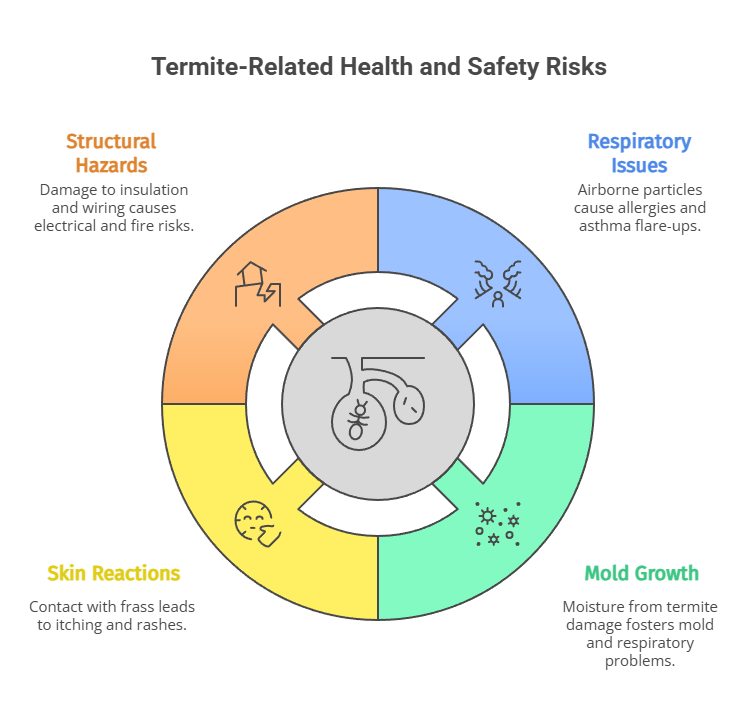
Though termites don’t carry diseases, their droppings (frass) and dust can become airborne. This can trigger allergies, asthma flare-ups, and respiratory irritation, especially in sensitive individuals.
Mold, Fungi & Air Quality Concerns
Damaged wood and increased moisture from termite activity can create the perfect environment for mold growth. Mold spores can lead to sinus problems, persistent coughing, and long-term respiratory issues. Termites may also carry fungal spores on their bodies, introducing another layer of risk.
Contact Dermatitis, Bites & Skin Reactions
While rare, termite soldier bites can cause mild skin irritation. More commonly, their frass can lead to itching, rashes, or allergic skin reactions when it comes into contact with sensitive skin.
Structural Safety & External Hazards
Beyond hidden wood damage, termites can chew into insulation or wiring. This creates risks of electrical malfunctions or even fire hazards if left unchecked.
Why Waiting Makes Things Worse
The longer termites are active, the more damage they cause. An infestation can take years to fully show, but by the time signs are visible, the destruction may already be severe. Addressing termites promptly reduces both the safety risks and the stress of extensive repairs.
What You Can Do Right Now
Early Inspections & Monitoring
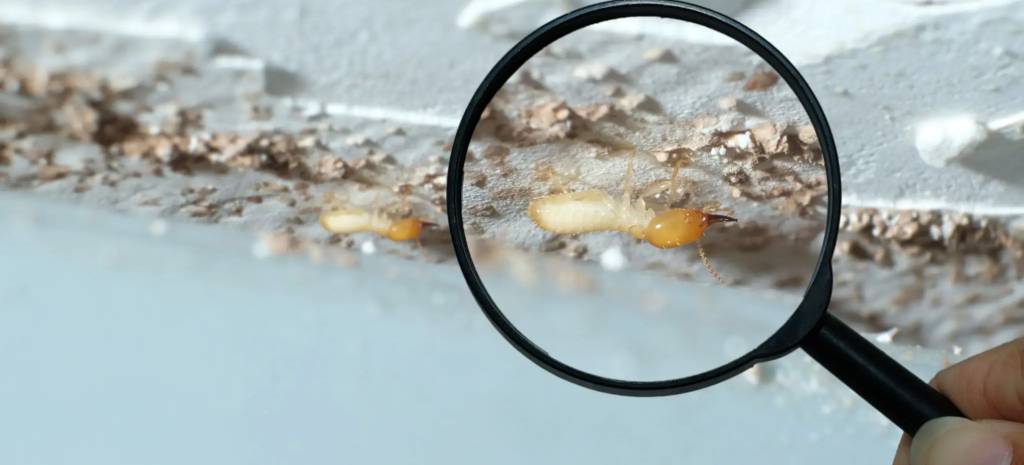
Watch for warning signs such as mud tubes, discarded wings, and hollow-sounding wood. Even if you don’t see obvious activity, scheduling a yearly inspection is one of the best ways to catch problems early.
Moisture Control & Preventive Measures
- Fix plumbing leaks quickly.
- Ensure good ventilation in crawlspaces and attics.
- Keep mulch and firewood away from the foundation.
- Seal cracks and entry points around your home.
When to Call BrockStar Pest Services
If you see swarms of termites, mud tubes, or wood that sounds hollow when tapped, it’s time to call a professional. BrockStar Pest Services offers tailored termite control solutions for Austin homeowners, from inspection to long-term prevention. Schedule a termite inspection today.
Find out why homeowners choose us for reliable termite control. Read our reviews now.
Conclusion
Termites may be small, but the dangers they pose are anything but. From undermining your home’s structural safety to creating health risks like mold and allergies, they can quickly turn into a serious threat. The best defense is early detection and professional treatment. Don’t wait for the signs to worsen—partner with BrockStar Pest Services to keep your home safe and sound.
FAQ
- Can termites harm people directly?
Termites don’t spread diseases to humans, but their droppings and dust can cause allergic reactions, asthma flare-ups, and respiratory irritation. - How fast can termites cause structural damage?
Depending on colony size, termites can damage wood for years before you notice. Serious destruction often develops within 3–8 years. - What are the early warning signs of a termite infestation?
Look for mud tubes on walls or foundations, piles of discarded wings, hollow-sounding wood, or bubbling paint. These are common signs of hidden termite activity. - Do termites increase mold risk inside homes?
Yes. Termite damage creates moisture pathways, and damp wood often fosters mold growth, which can cause long-term respiratory issues. - How can I prevent termites from coming back?
Reduce moisture around your home, store firewood away from your foundation, and schedule annual professional inspections. Preventive treatments from experts like BrockStar Pest Services provide ongoing protection.