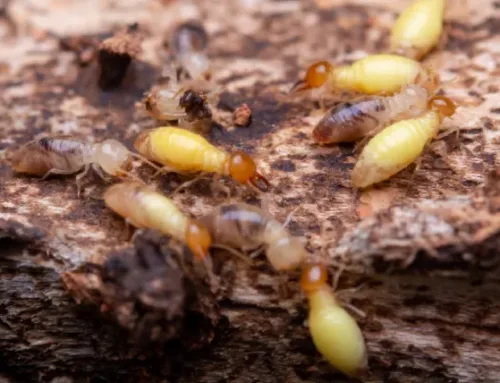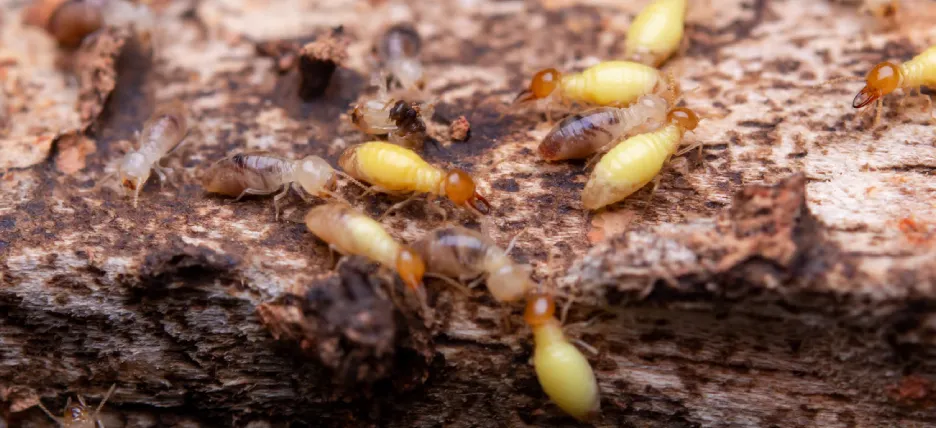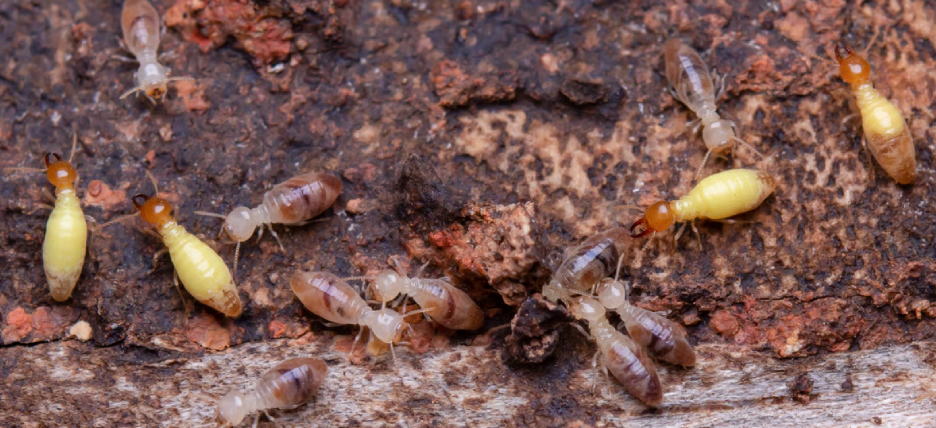
Saw winged bugs near a window and felt your stomach drop? You are not alone, Austin.
Here’s the good news: you can usually tell termite swarmers from flying ants in under a minute if you know what to look for, and the core ID traits are well documented (see the wing, waist, and antennae differences in this University of Maryland Extension comparison). University of Maryland Extension
If what you find points to termites, the next step is simple: schedule a pro check so you are not guessing. For fast, local termite control in Austin, BrockStar is Keep’n it Local since 2012, with ~20+ years of experience, and we can help you confirm what you are seeing and stop damage fast.
We provide expert termite control across Austin, Dripping Springs, Bee Cave, Lakeway, Round Rock, Buda, and Kyle. Protect your home today!
Quick Austin ID checklist (30 seconds)
If you only remember four things, remember these:
- Antennae: straight (termite) vs elbowed (ant)
- Waist: thick and straight (termite) vs pinched (ant)
- Wings: equal length (termite) vs front wings longer (ant)
- Where you saw them: indoors by light can be a bigger red flag
Those exact traits and the “indoors by windows and doors” pattern are also called out in University of Kentucky’s homeowner guide.
Termites vs flying ants side by side
Use this as your “hold the bug up to the light” guide.
| What you’re checking | Termite swarmer | Flying ant |
|---|---|---|
| Antennae | Straight | Elbowed (L shaped) |
| Waist | Broad, not pinched | Pinched, like a tiny wasp |
| Wings | Two pairs that look the same length | Front wings longer than back wings |
| Body shape | More uniform from head to tail | More “three part” look |
If you want a Texas specific version of the same comparison, Texas A&M’s Field Guide notes termites’ equal length wings and more uniform body, compared with ants’ narrow waist and uneven wings. Texas A&M Field Guide to Common Texas Insects
Austin timing: when you’re most likely to spot each one
In Austin, swarmers can show up when conditions are right, but the City of Austin’s termite guide notes that typical subterranean termite swarms often occur between February and March in Austin, and it also explains the common “equal wing length, no pinched waist” ID traits. (City of Austin Grow Green termite guide)
Practical takeaway: if you see a sudden burst of winged insects in late winter or early spring, treat it like a serious clue, take a few photos, and move to the “next steps” section below.
Where they show up around Austin homes (and what it can mean)
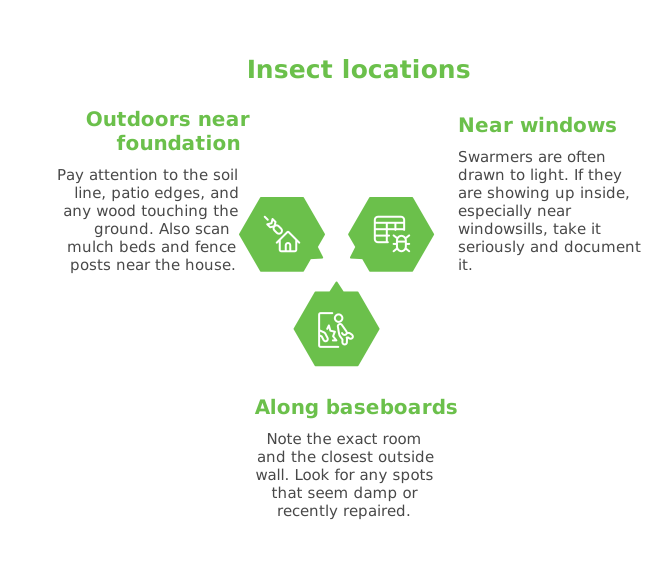
You do not need to be an insect expert. Focus on the pattern.
Near windows, doors, or lights
- Swarmers are often drawn to light.
- If they are showing up inside, especially near windowsills, take it seriously and document it.
Along baseboards, trim, and wall edges
- Note the exact room and the closest outside wall.
- Look for any spots that seem damp or recently repaired.
Outdoors near the foundation
- Pay attention to the soil line, patio edges, and any wood touching the ground.
- Also scan mulch beds and fence posts near the house.
Photo checklist: what to capture before you call
A few clear photos can speed up ID and next steps.
Take these 6 shots:
- Close up of the bug (try for antennae and waist)
- Close up of the wings (if present)
- Where you found them (window, door, baseboard)
- Any wings left behind (especially on windowsills)
- Outside view of the same area (foundation, mulch bed, porch)
- A wide shot so it’s easy to locate later
Tip: If you want to save a sample, use a small jar or a zip bag. No need to spray first.
What to do next based on what you saw
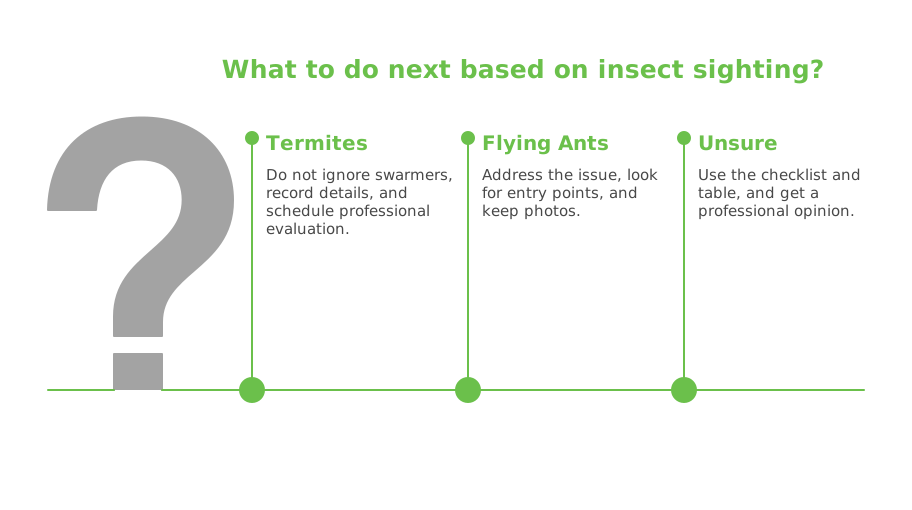
If it looks like termites
- Do not ignore indoor swarmers.
- Write down the location, time, and where the wings or insects were found.
- Schedule a professional evaluation so you are not guessing.
If a termite inspection is part of a home sale or purchase, Texas uses an official Wood Destroying Insect report form through the Texas Department of Agriculture’s Structural Pest Control Service. Texas Department of Agriculture WDI report form
If it looks like flying ants
- Still worth addressing, but it usually points to an ant colony, not termites.
- Keep your photos, then look for obvious entry points like gaps at doors or windows.
If you are not sure
- That is normal. Winged insects look similar at first glance.
- Use the checklist and table above, then get a pro opinion if you still feel unsure.
Simple Austin prevention habits that help either way
You cannot pest proof a home forever, but you can make it a lot less inviting.
- Keep wood off soil: don’t let boards, cardboard, or firewood sit directly on the ground near the house.
- Watch moisture: fix leaks, keep weep holes clear, and avoid constant water pooling by the foundation.
- Trim back contact points: vines and dense shrubs can hide activity near exterior walls.
- Do a monthly walk around: look at the foundation line, porch edges, and fence posts near the house.
See what our happy customers are saying! Read real reviews and discover why homeowners trust us.
Ready to Stop Guessing About Termites?
If your photos are starting to look more like termites than ants, you don’t have to keep guessing. Book BrockStar’s termite control in Austin and we’ll help you confirm exactly what you’re dealing with, identify where activity is coming from, and outline a clear plan forward.
During your visit, we’ll review the signs you’re seeing, inspect the most likely entry points and risk areas around your home, and explain which treatment options make sense for your structure and the termite type involved—so you can move from uncertainty to a practical next step with confidence.
FAQ
1) Are termites common in Austin homes?
Austin sits in an area where termites can be active, especially subterranean termites. If you see swarmers in the typical Austin window (late winter into early spring), treat it as a serious clue and get a professional check.
2) Do flying ants always mean termites?
No. Flying ants and termite swarmers can show up around the same times of year, which is why the wing and waist checklist matters. If the bug has a pinched waist and uneven wings, it is more consistent with flying ants.
3) What are the first signs of termites inside a house?
One early sign can be winged termites inside, often noticed near windows or doors. If you find piles of shed wings indoors, document the location and get a professional inspection.
4) If I see swarmers once, am I in the clear?
Not necessarily. A one time swarm can still be a sign that termites are nearby, and conditions can shift over time. Taking photos and getting a professional evaluation is the best way to replace worry with a clear plan.
5) Should I get a termite inspection before buying a home in Austin?
If you are buying, it is smart to ask about a Wood Destroying Insect inspection and what documentation is required for your situation. When a formal report is needed, Texas uses an official WDI form through the state’s Structural Pest Control Service.