Central Texas yards are not all the same. Some spots hold water after a storm. Others shed water fast and push it downhill. Either way, moisture near a home can change where termites find an easier path—and that’s a big factor in termite control in Austin.
This hub helps you choose your service area and know what to ask for before you book.
We provide expert termite control across Austin, Dripping Springs, Bee Cave, Lakeway, Round Rock, Buda, and Kyle. Protect your home today!
Quick answer: what changes by area?
- Soil can hold water longer or shed it fast across Texas regions, as shown on the USDA NRCS General Soil Map of Texas.
- Moisture control and wood to soil contact checks show up in the prevention tips in the EPA termite guide.
- In Texas, a termite treatment estimate comes with written disclosure details and a diagram of treated areas, per the Texas Department of Agriculture disclosure form.
- A clear proposal spells out scope and warranty terms, which matches the consumer checklist in Texas A&M AgriLife’s “How to Select a Termite Control Service”.
Service areas we cover for termite treatment
We serve Austin plus Dripping Springs, Bee Cave, Lakeway, Round Rock, Buda, and Kyle. Keep’n it local since 2012. If you want to get scheduled, start here: Book our Termite Control Austin.
Below are local cues for each area. The slugs are plain text so your web team can link them inside your site build.
Tip: If you are unsure which area fits, choose the closest city. Your tech can tailor the plan after inspection and a walk around at home.
Austin
- Soil and drainage cue: Watch for spots that pool water near the slab edge.
- Moisture and watering cue: Sprinklers that hit the wall line can keep one side damp.
- Landmark cues: Lady Bird Lake, Barton Creek, The Domain.
Dripping Springs
- Soil and drainage cue: Slopes can move runoff toward low spots near the home.
- Moisture and watering cue: Bed irrigation near walls can keep soil damp.
- Landmark cues: Hamilton Pool area, local greenbelts.
Bee Cave
- Soil and drainage cue: Hard ground can push water to one corner of the lot.
- Moisture and watering cue: Thick mulch beds can hold moisture close to the house.
- Landmark cues: Hill Country Galleria, Bee Cave Central Park.
Lakeway
- Soil and drainage cue: After rain, note where water rests along the perimeter.
- Moisture and watering cue: Shade zones can stay damp longer.
- Landmark cues: Lake Travis area, Lakeway City Park.
Round Rock
- Soil and drainage cue: Look for runoff lines that lead straight to the foundation.
- Moisture and watering cue: Check downspouts, AC drains, and sprinkler overspray.
- Landmark cues: Dell Diamond, Old Settlers Park.
Buda
- Soil and drainage cue: Check for low spots where water sits close to walls.
- Moisture and watering cue: Keep beds from stacking high against the home.
- Landmark cues: Downtown Buda, Stagecoach Park.
Kyle
- Soil and drainage cue: Treat soggy strips by the home as a drainage clue.
- Moisture and watering cue: Keep wood and cardboard off the ground near walls.
- Landmark cues: Plum Creek area, local trails.
How to compare plans in a clean, fair way
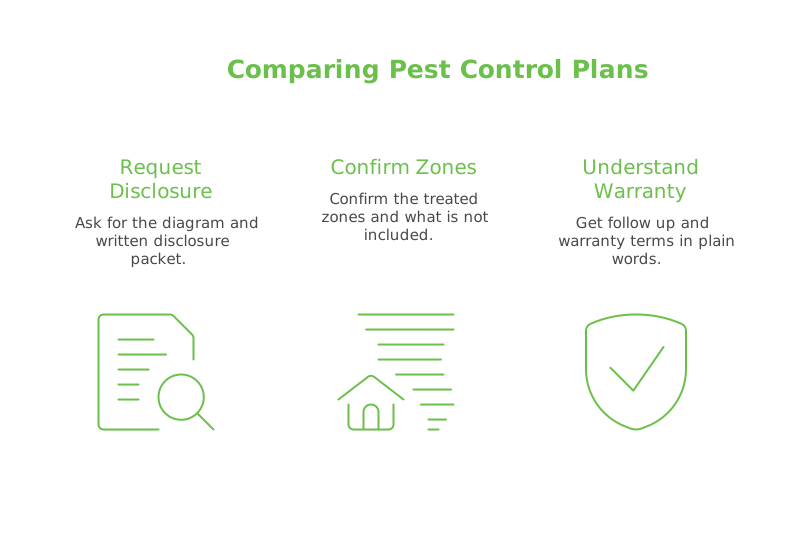
You want a scope you can point to.
Ask for the diagram and written disclosure
The disclosure packet should show what will be treated and where. If you do not see a diagram, ask for it.
Confirm the treated zones and what is not included
Two quotes can look similar while covering different sections of a home. Have the company name the zones in the proposal.
Get follow up and warranty terms in plain words
Ask what happens after the first visit and what the warranty covers, plus what you must do to keep it active.
Quick prep steps before your appointment
- Move stored items away from walls so the tech can see key spots.
- Note leaks or soggy soil lines near the home.
- Pull wood back from soil where you can.
See what our happy customers are saying! Read real reviews and discover why homeowners trust us.
FAQ
1) Which termite control areas do you serve?
We serve Austin and nearby areas including Dripping Springs, Bee Cave, Lakeway, Round Rock, Buda, and Kyle. Pick your area above, then reach out to get scheduled.
2) Why does the plan change between areas?
Soil and drainage move water in different ways, and that changes where moisture sits near a foundation. Point out damp spots and ask how the plan addresses them.
3) What should I do before the technician arrives?
Clear the wall line so slab edges and key points are easy to see. Call out leaks or soggy patches near the home.
4) What paperwork should I expect with a termite estimate?
Expect a written plan that spells out what will be treated and a diagram of treated areas. If the paperwork does not match what was discussed, ask for a corrected version before you book.
5) I am outside these cities. Can I still schedule?
If you are near the Austin metro, reach out with your address and the closest city. We will tell you if you are in range.