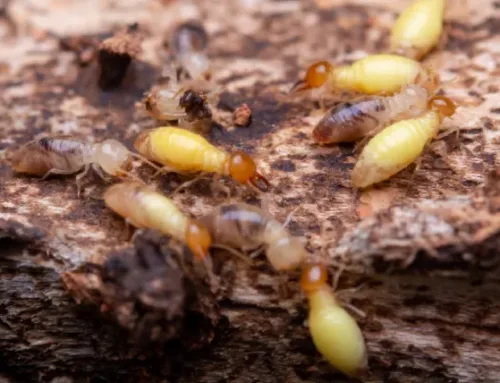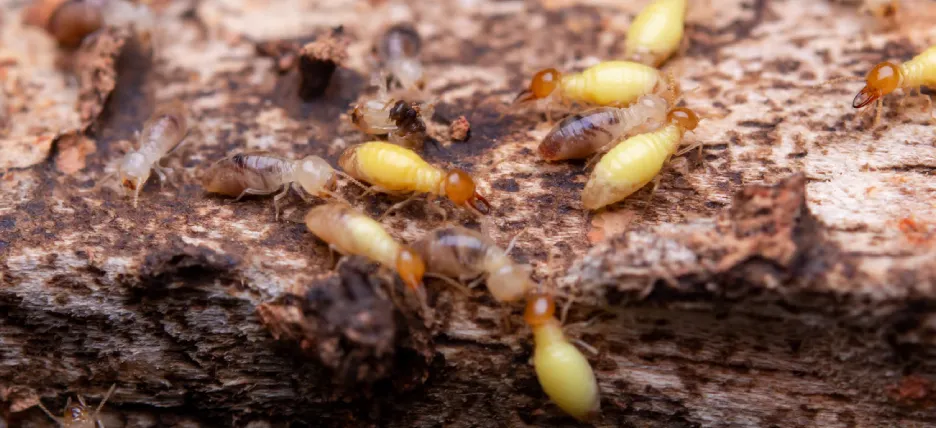
If you run a restaurant, manage an office, or keep a warehouse moving, termites are the kind of problem that can sneak up—and then get expensive.
The U.S. Environmental Protection Agency notes that termites cause billions of dollars in structural damage each year, and that property owners spend over two billion dollars on treatment. That’s why commercial sites need a plan you can prove on paper, not a “spray and pray” approach. US EPA termite guide
At BrockStar, we’ve been Keep’n it Local since 2012, with 20+ years of experience helping Austin homes and businesses kick pests out. If you want to get ahead of termites (or confirm what you’re seeing), book our termite control Austin service!
We provide expert termite control across Austin, Dripping Springs, Bee Cave, Lakeway, Round Rock, Buda, and Kyle. Protect your home today!
Why termites are a business problem (not just a building problem)
Termites don’t care if your space is a bistro, a boutique office, or a big ol’ warehouse. If there’s wood, moisture, and hidden access, they’ll take the invite.
And the stakes are higher in commercial spaces:
- Downtime costs money (repairs, closures, tenant headaches)
- Reputation takes a hit when customers or staff see swarmers or damage
- Documentation matters for audits, property records, and lease situations
Even the City of Austin’s local termite guide calls out that termite swarmers can show up year-round, with typical swarms between February and March in Austin—so it’s smart to keep your eyes open and your plan ready. City of Austin termite guide (PDF)
The two goals of commercial termite control
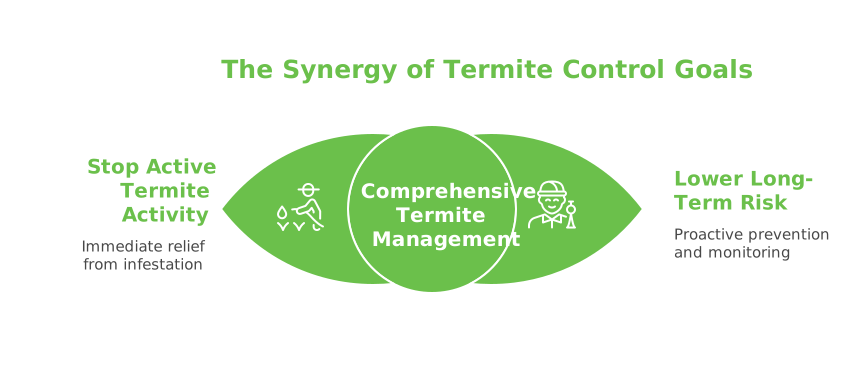
Commercial termite control usually comes down to two clear goals:
- Stop active termite activity (if it’s happening)
- Lower risk long-term with a monitoring program (so you’re not surprised later)
That second goal is where commercial service looks different from residential. You don’t just want treatment. You want a repeatable routine with records.
What a commercial termite program usually includes
Below is the “plain English” version of what decision-makers typically need.
| Program piece | What it looks like | What you get (deliverable) |
|---|---|---|
| Site inspection | Interior + exterior check focused on entry points and risk zones | Findings + a clear next-steps plan |
| Treatment plan | Built around your structure, activity level, and site conditions | Treatment details you can file |
| Monitoring schedule | Regular check-ins (monthly/quarterly/seasonal) based on risk | A predictable calendar + trend notes |
| Reporting | Quick, readable service notes after each visit | A shareable report for owners/tenants |
| Follow-up verification | Rechecks that confirm progress and catch changes early | “Here’s what changed” clarity |
Inspection and risk mapping: where pros look first
Termites often stay hidden, which is why a real inspection focuses on places people don’t.
Common Austin commercial hot spots include:
- Restaurants: back doors, mop sinks, plumbing chases, patio/fence contact
- Offices: breakrooms, window lines, utility penetrations
- Warehouses: dock doors, pallet storage, slab edges, exterior landscaping
Treatment options: why one-size-fits-all doesn’t work
Commercial buildings vary a lot—slabs, crawl spaces, loading docks, landscaping, tenant build-outs. The right plan depends on what’s happening and how your property is set up.
If you’re dealing with a real estate or compliance situation, Texas uses an official Wood Destroying Insect report format. The Texas Department of Agriculture’s WDI report form shows how inspections document structures inspected, findings, and conditions that can contribute to activity—the kind of details that matter for owners and managers. Texas Department of Agriculture WDI report (PDF)
Compliance-friendly documentation: what to ask for
When you hear “documentation,” think: audit-ready, shareable, easy to store.
A solid commercial termite partner should be able to provide:
- Visit dates, areas checked, and findings
- Corrective actions (what was done and where)
- Notes on conditions that raise risk (moisture, wood contact, entry points)
- A simple summary you can forward to stakeholders
Restaurant compliance: keeping the paper trail clean
Restaurants get extra eyes on sanitation and facility conditions. Texas food establishment rules include requirements aimed at keeping facilities insect-proof/rodent-proof and maintaining areas to prevent entry of pests and other vermin (and they address how pesticides are applied in regulated settings). That’s why clean reporting and clear corrective actions can make life easier during inspections. Texas Food Establishment Rules (DSHS PDF)
Offices and multi-tenant buildings: fewer surprises, fewer complaints
In shared buildings, communication is half the battle. Your reports should make it easy to answer:
- Which areas were checked (common areas vs suites)
- What was found (or not found)
- What you want the building team or tenant to fix (if anything)
Warehouses and facilities: dock doors and storage habits matter
Warehouses can have a lot of “open and close” action at dock doors, plus wood pallets and storage areas that hold moisture. Monitoring helps you spot patterns early so your team can adjust before it turns into repair work.
After-hours service: how to plan it without disrupting business
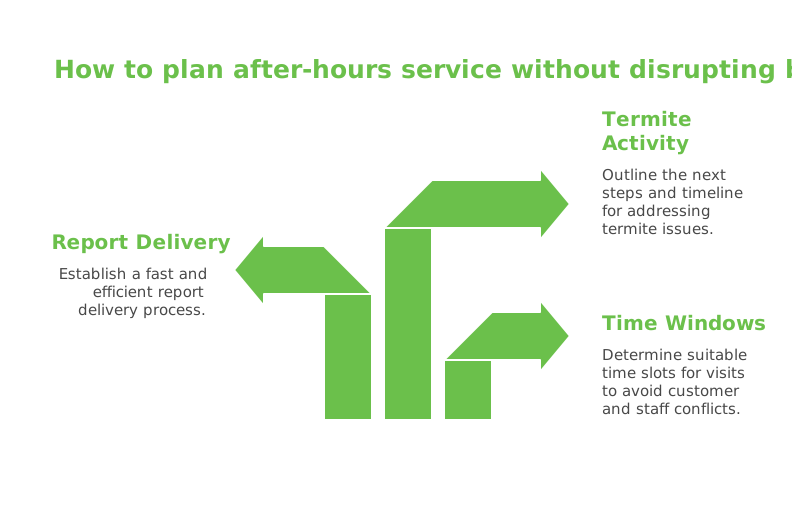
If you operate on a tight schedule, ask about after-hours options so service doesn’t collide with customers, staff, or shipping.
Quick planning questions:
- What time windows do you offer for early-morning or after-close visits?
- Who gets the report, and how fast after the visit?
- If you find termite activity, what’s the next step and the timeline?
A quick “spot it early” checklist for staff
Termites are sneaky. Staff can help by reporting the right signs right away.
Ask team members to flag:
- Winged insects near lights or windows (especially sudden swarms)
- Discarded wings on sills or near doors
- Mud tubes along slab edges, walls, or utility lines
- Soft or damaged wood around trim, door frames, or storage areas
The National Pest Management Association highlights swarmers, mud tubes, damaged wood, and discarded wings as common signs to watch for, which makes this a solid training list for managers. NPMA Termite Season press release (PestWorld)
Choosing a commercial termite partner in Austin
Before you sign anything, ask these six questions:
- What gets documented after each visit?
- How fast do we receive reports?
- What’s the monitoring schedule, and can it adjust if risk changes?
- How do you handle multi-tenant communication?
- Do you have after-hours options?
- How do follow-ups work if activity shows up again?
See what our happy customers are saying! Read real reviews and discover why homeowners trust us.
Next steps: get a plan you can show, not just a treatment
Commercial termite control works best when it’s simple: inspect, treat when needed, monitor on a schedule, and keep clean records.
If you’re in Austin and want a termite plan that fits restaurants, offices, and warehouses—plus reporting that’s easy to share—BrockStar can help you get it handled with termite control Austin services.
FAQ
1) How often should a commercial property in Austin be checked for termites?
Most commercial sites benefit from a repeat inspection rhythm tied to risk factors like moisture, wood contact, landscaping, and how often doors and docks stay open. Because Austin termite swarmers can appear year-round and typical swarms are often noted in late winter to early spring, it’s smart to keep monitoring on a predictable schedule and adjust when conditions change.
2) Can termite activity impact restaurant inspections or audits?
Termites can create building-condition issues that raise questions, and restaurants also need to keep facilities protected against pest entry. Texas food establishment rules include insect-proof/rodent-proof expectations and pest-prevention measures, which is why a clear service record and corrective actions can be helpful when auditors ask what you’re doing to prevent pest problems.
3) What should be included in commercial termite service documentation?
At minimum: areas inspected, findings, what was done, and what needs to be corrected on-site (like moisture or wood contact). A WDI-style report format shows the kind of structure-and-conditions detail that’s useful for property records and stakeholder communication.
4) Do warehouses need different termite monitoring than offices?
Often, yes. Warehouses may have higher exposure at dock doors and storage areas (including pallets) and can have exterior conditions that shift with operations. Offices may have more hidden plumbing chases, breakrooms, and window lines—so monitoring points can look different.
5) What’s the fastest way to get service without disrupting business hours?
Ask about after-hours options and set a reporting routine so you get updates quickly after each visit. A good plan also includes a clear “if we find activity, here’s the next step” process so you’re not scrambling mid-shift.