Owning apartments in Austin is a lot like hosting a big backyard BBQ—if one guest sneaks in through the fence, they don’t just hang out in one corner. Termites can work the same way, which is why staying proactive with termite control in Austin matters.
Whether you already suspect termites (urgent) or you want a smart prevention plan that fits your unit turns, this guide lays out the owner-friendly playbook: what to look for, what to do next, how WDI inspections fit in, and how to protect the whole property.
We provide expert termite control across Austin, Dripping Springs, Bee Cave, Lakeway, Round Rock, Buda, and Kyle. Protect your home today!
Why termites are a bigger deal in apartments and multi-family
In single-family homes, you can often draw a clean box around “the problem.” In multi-family, it’s more like dominoes.
- Shared walls and connected plumbing paths can make it easier for issues to pop up in more than one unit.
- Common areas (laundry rooms, storage, breezeways, leasing offices, amenity spaces) get overlooked-until they don’t.
- Owner risk is building-wide: repairs, resident complaints, unit downtime, and paperwork.
Austin-specific reality check
Austin’s climate can support termite activity, and the bigger the property footprint, the more places there are for termites to try their luck.
One practical note: subterranean termites are the main worry for most structures, and a classic sign owners watch for is mud shelter tubes around foundations, utility openings, or slabs-along with swarmers (winged termites) and discarded wings, as described in Texas A&M AgriLife Extension’s guidance on subterranean termites (Texas A&M AgriLife Extension).
Signs of termites in an apartment building (owner checklist)
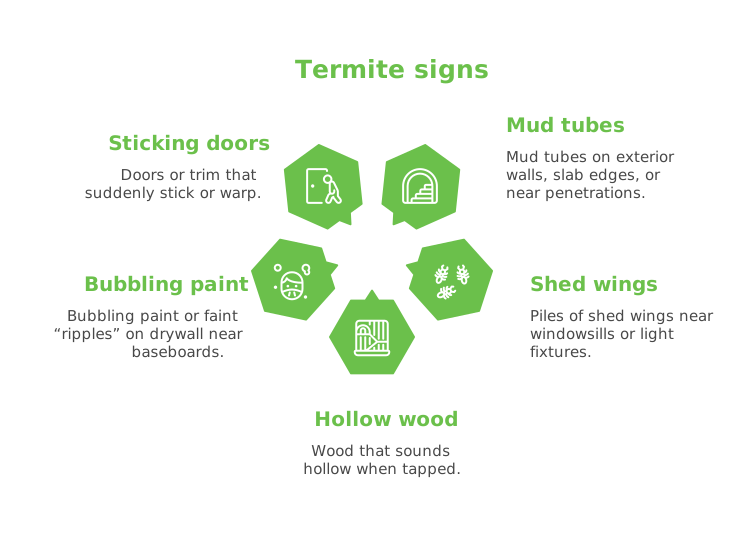
Use this as your fast “walkthrough” list-especially in ground-floor units, utility rooms, and common areas.
Quick signs to watch for
- Mud tubes on exterior walls, slab edges, or near penetrations
- Piles of shed wings near windowsills or light fixtures
- Wood that sounds hollow when tapped
- Bubbling paint or faint “ripples” on drywall near baseboards
- Doors or trim that suddenly stick or warp
Common lookalikes (don’t guess-verify)
- Ant swarmers (can look similar at a glance)
- Water damage that mimics “soft wood”
If you’re not sure, treat it like a smoke alarm: you don’t ignore it just because you hope it’s toast.
Two paths owners take: urgent help vs prevention
Most apartment owners fall into one of these two camps. You can be both.
If you suspect termites right now (urgent steps)
- Document what you see (photos + exact unit/common-area location).
- Avoid disturbing the evidence (scraping tubes or spraying store products can make inspection harder).
- Limit the spread of rumors (more on tenant communication below).
- Schedule a professional inspection so you can move from “suspect” to “plan.”
For the big-picture impact: the U.S. EPA notes termites cause billions of dollars in structural damage each year, and property owners spend over two billion dollars annually on treatment (U.S. Environmental Protection Agency).
If you want prevention (the “stop the next surprise call” plan)
A prevention program helps owners catch risk early, keep documentation clean, and reduce emergency situations during peak leasing and unit turns.
What a multi-family termite program should include (owner-focused)
No fluff-this is the stuff that protects your building and your time.
1) Building assessment + risk map
A good program starts with a walk of the whole property:
- Perimeter and foundation lines
- Plumbing penetrations and utility entry points
- Landscaping that holds moisture against the structure
- Places where wood and soil meet (fences, planters, stored materials)
Here’s the simple principle: termite problems often show up when wood components are in direct contact with soil, because that contact provides easy access to food and moisture-so eliminating wood-to-soil contact is a common prevention step (University of Kentucky Entomology).
2) Unit-turn inspections (your easiest access window)
Unit turns are the cleanest time to inspect without disrupting residents.
A unit-turn termite check typically focuses on:
- Baseboards and trim (especially along exterior walls)
- Bathrooms and kitchens (moisture areas)
- Windowsills and door frames
- Patio/balcony thresholds (if applicable)
Tip: Keep a simple pass/fail checklist so your team can flag concerns before the next lease starts.
3) Common-area checks owners forget
Common areas are where “out of sight, out of mind” can bite.
Add these to your regular schedule:
- Laundry rooms and mechanical closets
- Storage rooms, trash enclosures, and cardboard storage spots
- Clubhouse/amenities and leasing offices
- Stairwells, breezeways, and ground-floor hallways
4) Prevention options (without the science lecture)
Owners usually want clear options that match the building setup.
Common approaches include:
- Perimeter-focused protection around the structure
- Monitoring systems that help spot activity early
- Targeted treatment where activity is confirmed
- Conditions fixes (moisture, grading, wood contact)
For a deeper technical overview of subterranean termite biology and why contact with soil matters, the USDA Forest Service notes these termites live in underground colonies and may attack wood in contact with soil (and build shelter tubes to reach wood above ground) (USDA Forest Service).
5) Clear documentation you can use
Apartment ownership runs on documentation:
- Findings by building and location
- Conditions that increase risk
- Recommended next steps
- Dates, areas inspected, and follow-up notes
That paper trail helps you manage residents, vendors, and major decisions.
WDI inspections in Texas (when apartment owners need it)
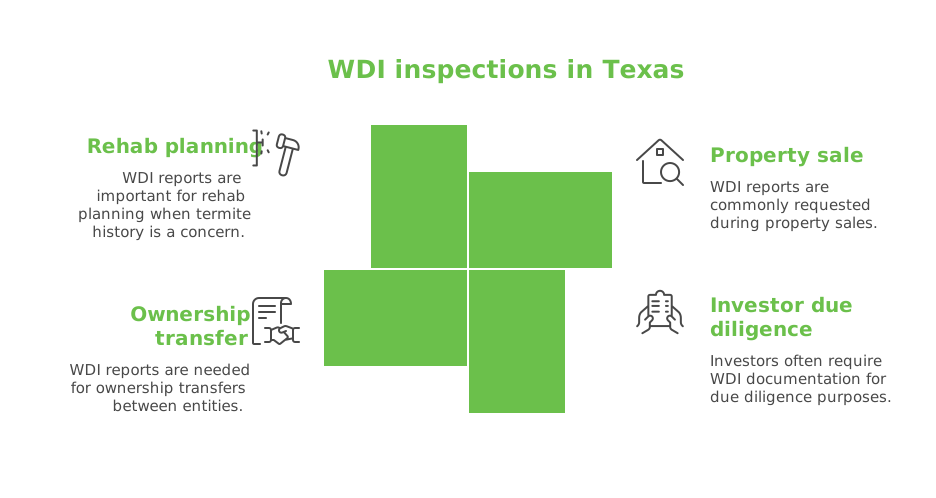
When you need a WDI report, Texas uses an official form for wood destroying insect inspections.
The Texas Department of Agriculture’s Texas Official Wood Destroying Insect Report (SPCS/T-5) states the structure is inspected under official procedures, and the report is subject to a defined scope of inspection (Texas Department of Agriculture).
When owners commonly request WDI documentation
- Property sale or refinance
- Investor due diligence
- Ownership transfer between entities
- Big rehab planning when termite history is a concern
(Quick reminder: a WDI is a valuable document, but it doesn’t replace a building-wide prevention program. Owners often use both.)
Tenant communication that prevents panic and speeds up access
Tenant messaging can either help you solve the issue fast-or slow everything down.
What to say (simple and steady)
- You’re scheduling an inspection as a precaution
- What residents should do before entry (pets, access, clutter near walls)
- Who to contact if they see wings, tubes, or damaged wood
What not to say
- Don’t diagnose by text message.
- Don’t promise outcomes before inspection.
- Don’t let “termite talk” turn into hallway rumors.
The “stop it from coming back” playbook (multi-family edition)
If you want fewer repeat calls, focus on the stuff termites love.
- Moisture: fix leaks quickly, keep irrigation from soaking the slab edge, and watch chronic damp spots.
- Wood contact: keep soil and mulch from bridging up to wood trim or siding.
- Storage habits: avoid stacking cardboard or wood against exterior walls in storage rooms.
- Access points: seal gaps where practical and keep areas around penetrations visible.
See what our happy customers are saying! Read real reviews and discover why homeowners trust us.
Ready to act? Book our termite control Austin
If you’re seeing warning signs-or you just want a program that fits your unit turns and keeps the whole property protected-book our termite control Austin and get a clear inspection-based plan (including WDI support when you need it).
FAQ (Apartment Owner Edition)
1) Do termites spread from one unit to another?
In apartments, it’s smart to assume termites can show up in more than one place because buildings share walls and structural pathways. If you suspect activity in one unit, treat it as a building-wide risk until an inspection proves otherwise.
2) What should I do if a tenant reports termite wings or mud tubes?
Thank them, ask for photos if possible, and set expectations for next steps and timing. Then schedule an inspection and keep communication calm and clear so you can get access and document everything.
3) What’s included in a Texas WDI inspection report?
A Texas WDI report documents the visible presence or absence of wood destroying insects and conditions observed at the time of inspection, based on the form’s scope. If you’re using it for a transaction, keep the report with your records and pair it with a building-wide plan if risk factors exist.
4) How often should apartments schedule termite inspections?
Many owners tie inspections to unit turns plus routine common-area checks, since those are the easiest access windows and the highest-traffic areas. The right schedule depends on building layout, landscaping, moisture history, and any prior termite activity.
5) Can termites come back after treatment in a multi-family building?
They can, especially if conditions that attract termites stay in place (moisture and wood contact are big ones). That’s why owners get better results when treatment is paired with prevention steps and repeat inspections.