If you’re a homeowner in Austin, a termite inspection is one of the simplest ways to get clarity. No guesswork. No doom-and-gloom. Just a straight look at what’s going on around your home—and what (if anything) needs attention.
This guide breaks down how termite inspections work, what we’re checking for, how real estate inspections differ from routine checkups, how to prep, what an inspection report usually includes, and how to contact BrockStar for termite control in Austin.
We provide expert termite control across Austin, Dripping Springs, Bee Cave, Lakeway, Round Rock, Buda, and Kyle. Protect your home today!
What a termite inspection is (and what it isn’t)
A termite inspection is a careful visual inspection of the areas where termites are most likely to show up or leave clues behind. The U.S. Environmental Protection Agency notes that termite activity is often hidden and that evidence can show up in places like wood, foundations, and other vulnerable spots (EPA guidance on identifying and controlling termites).
What it is:
- A focused, room-by-room and perimeter-based look for termite signs and risk conditions
- A written record of what we saw (and what we couldn’t see)
What it isn’t:
- A guarantee that no termite could exist behind sealed walls or inaccessible spaces
- A “tear the house apart” investigation (we don’t start pulling finishes or opening walls)
What termite inspectors look for around Austin homes
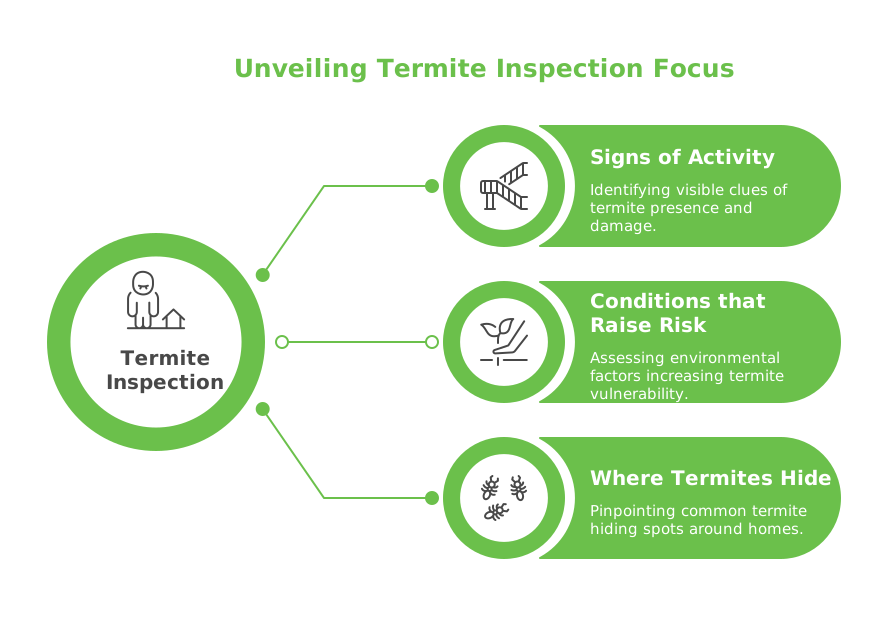
When we inspect, we’re doing two things at once:
- looking for signs of activity, and
- looking for conditions that make termites more likely.
In Central Texas, homeowners most often worry about subterranean termites, which can take advantage of soil contact and moisture conditions around a structure (Texas A&M AgriLife Extension overview of subterranean termites).
Visible signs of termite activity
Here are common clues we look for during a visual inspection:
- Mud-like tubes along foundations or walls
- Wood that sounds hollow or looks damaged
- Areas that look “repaired” but don’t match surrounding materials
- Wings or small piles of insect parts near windowsills or doors
Conditions that can raise termite risk
A lot of termite trouble starts with what’s happening around the home, not inside it. University of Kentucky Extension points out that issues like wood-to-soil contact and excess moisture can increase the chance of termite problems (UK Extension termite prevention factors).
We pay close attention to things like:
- Wood touching soil (trim, siding, fence posts, decking)
- Moisture problems (leaks, poor drainage, wet soil near the foundation)
- Cracks or gaps that create easy entry points
Where termites like to hide
We focus on the “usual suspects,” including:
- The foundation line and exterior perimeter
- Garages and utility rooms
- Areas around plumbing penetrations
- Attics (when accessible)
- Door frames, baseboards, and other wood components
How a termite inspection works (step by step)
We keep the process simple and homeowner-friendly.
Step 1 — Exterior walk-around
We start outside and work our way around the home. This is where we look for:
- Clues along the foundation
- Entry points and gaps
- Moisture patterns and drainage issues
Step 2 — Interior check
Next, we check interior areas where termites may leave signs or where moisture may be present.
Step 3 — Findings and next steps
If we spot concerns, we’ll explain what we found in plain English and what your options are.
Real estate termite inspections vs routine checkups
Both are termite inspections—but the paperwork and purpose can be different.
Real estate inspections in Texas (WDI report basics)
In Texas, many real estate transactions use an official Wood Destroying Insect (WDI) Report (T-5) to document visible evidence of wood destroying insects and conditions that may contribute to infestation (Texas Department of Agriculture T-5 WDI Report).
Routine inspections for homeowners
A routine termite check is about staying ahead of surprises. It’s a practical way to spot early warning signs and fix risk conditions before they turn into a bigger headache.
Termite inspection prep checklist for Austin homeowners
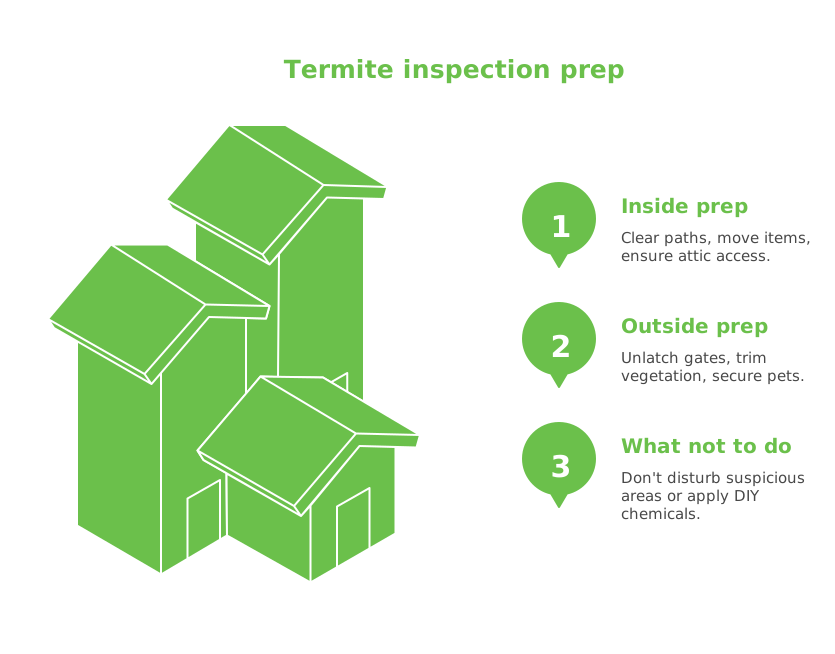
You don’t need to deep-clean your whole life—just help us access the areas we need to see.
10-minute prep (inside)
- Make a clear path to the garage, utility room, and water heater area
- Move stored items a little off walls in tight spaces (closets, garage corners)
- If you have attic access, make sure it’s reachable (when applicable)
10-minute prep (outside)
- Unlatch gates so we can walk the full perimeter
- Trim back anything blocking the foundation line (just enough for visibility)
- Secure pets so we can move safely and quickly
What you should NOT do
- Don’t disturb a suspicious area—point it out and let us take a look
- Don’t apply DIY chemicals right before an inspection (it can make findings harder to interpret)
Understanding your termite inspection report (what it usually includes)
Your report should help you answer a simple question: What did we see—and what should you do next?
What a Texas-style WDI report typically covers
The National Pest Management Association describes WDI reporting as documentation focused on observed evidence and conditions, and the form-style structure is designed to be clear and consistent (NPMA WDI forms information).
You’ll commonly see sections that cover:
- Areas inspected (and any areas not accessible)
- Evidence observed (if any)
- Conditions that may contribute to wood destroying insect activity
- Notes and recommendations
Example findings (mock scenarios)
- “No visible evidence noted” → We didn’t see signs during the visual inspection in accessible areas.
- “Conducive conditions observed” → Something about the property could increase risk, even if we don’t see active termites.
- “Evidence observed” → We saw clues that need action, and we’ll walk you through what that looks like.
When to ask follow-up questions
Good questions to ask your inspector:
- What specific area(s) raised concern?
- Was the issue active, old, or unclear based on visible evidence?
- What changes can reduce risk going forward?
Why Austin homeowners contact BrockStar for termite inspections
We’re locals. We’re straightforward. And we don’t talk down to you.
At BrockStar, we’re proud to be Austin-based and Keep’n it Local since 2012 (that’s not just a slogan—it’s how we work). We show up, explain what we’re seeing, and help you choose a sensible next step.
Our approach is built on:
- Clear communication (no scare tactics)
- Safe, homeowner-first recommendations
- A simple path to scheduling and follow-up
See what our happy customers are saying! Read real reviews and discover why homeowners trust us.
Ready to get checked? Contact BrockStar
If you want a termite inspection in Austin, reach out to BrockStar.
When you contact us, it helps to share:
- Your neighborhood or part of Austin
- Any areas you’re concerned about (leaks, wood damage, past repairs)
- Whether this is for routine peace-of-mind or a real estate timeline
Contact BrockStar and we’ll help you get a termite inspection on the calendar.
FAQ
1) How long does a termite inspection usually take?
It depends on your home’s size, layout, and how easy it is to access key areas. When you contact BrockStar, we’ll tell you what to expect for your specific home and appointment.
2) Do I need a termite inspection when buying a home in Austin?
Many Texas transactions call for a WDI-style inspection and documentation as part of the process. If you’re under contract, tell us your deadline and we’ll help you plan the right inspection type and timing.
3) What are common termite warning signs homeowners miss?
Homeowners often notice the big stuff first, but smaller clues can matter too. If you’ve seen anything unusual—like changes in wood condition near moisture areas—flag it when you contact us so we can focus on it during the inspection.
4) What happens if the inspector finds “conducive conditions” but no active termites?
That’s actually useful information. It means we can focus on lowering risk—like fixing moisture issues or reducing wood-to-soil contact—so you’re less likely to deal with termites down the road.
5) How can I lower termite risk around my home year-round?
Keep moisture under control and keep wood from sitting directly against soil whenever possible. Small maintenance steps—especially around drainage, leaks, and exterior wood—can make your home a less inviting target.