When termites show up, you want two things: a solid plan and a quote that actually means something. And if you’re comparing termite control in Austin options, the hard part is knowing what a quote actually includes.
This guide skips price numbers on purpose. Homes, access, and treatment plans are all over the map, so a single number can mislead. What you can control is how you compare proposals and what you ask before you book.
We provide expert termite control across Austin, Dripping Springs, Bee Cave, Lakeway, Round Rock, Buda, and Kyle. Protect your home today!
Quick answer: what drives termite treatment quotes in Austin?
- Treatment type changes the scope, especially if you are choosing between a one-time liquid approach and a monitored bait program (see NC State Extension’s overview of termite baiting systems).
- Texas paperwork requirements help you compare plans, because termite bids are supposed to come with specific disclosure documents (the Texas Department of Agriculture lists what must be provided with a termite bid).
- Home access and structure details (foundation edges, tight spaces, attached concrete, obstacles) can add or remove steps, which changes labor (Texas A&M AgriLife breaks down what to look for in a service proposal in How to Select a Termite Control Service).
- Conditions that invite termites (wood touching soil, moisture, covered slab edges) can change what a technician recommends after inspection (the U.S. EPA lists common prevention steps and treatment approaches).
What you are really paying for (even when quotes look different)
Quotes vary because the scope varies. Instead of asking, “What is the price?” ask, “What is included?”
The scope pieces to look for in any quote
Use this as your “apples-to-apples” checklist. You are not trying to become a termite expert. You are trying to make sure the work is clearly spelled out.
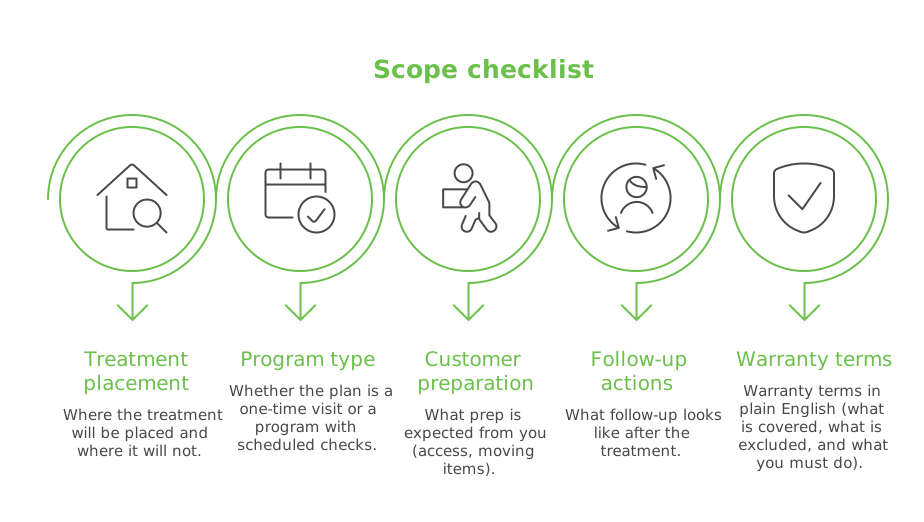
Scope checklist
- Where the treatment will be placed (and where it will not)
- Whether the plan is a one-time visit or a program with scheduled checks
- What prep is expected from you (access, moving items)
- What follow-up looks like
- Warranty terms in plain English (what is covered, what is excluded, and what you must do)
Treatment types you will hear about in Austin
You asked for termite treatment only, so here is the quick breakdown that shows up in proposals.
Liquid soil treatments
Many plans talk about treating around the foundation or at key entry points. What changes the quote is usually the “hands-on” part: access, prep, and how many areas need attention.
Ask these questions
- “Which sides of the home are included?”
- “What do you want cleared before you arrive?”
Bait station programs
With bait plans, the install is only part of the story. The visits after install are where the value is, because the stations are checked and serviced on a schedule.
Ask these questions
- “How often are stations checked?”
- “If activity shows up again, what changes?”
Limited-scope work
Sometimes a proposal is written to address a specific area first. That can be fine as long as the document clearly states the limits of the plan.
Ask these questions
- “What problem does this solve right now?”
- “What problem does this not solve yet?”
How to compare two quotes without getting burned
Print both proposals (or pull them up side by side) and do this simple scan.
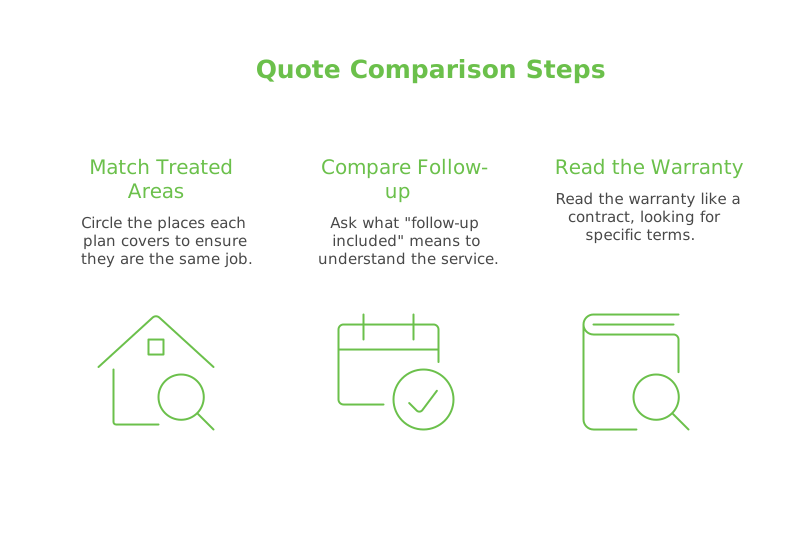
Step 1: Match the treated areas
Circle the places each plan covers:
- Perimeter and foundation edges
- Attached slabs (patios, garages, porches)
- Any listed interior points (if included)
If one plan skips an area the other covers, they are not the same job.
Step 2: Compare follow-up, not marketing
When a proposal says “follow-up included,” ask what that means:
- Is monitoring scheduled or only “as needed”?
- What triggers a return visit?
- Who decides if the plan changes?
Step 3: Read the warranty like a contract
Warranties can be written in ways that sound similar but behave differently. Look for:
- Retreatment terms
- Renewal requirements (if any)
- Homeowner responsibilities (access, moisture fixes, keeping areas clear)
If you cannot explain the warranty in one minute, ask the company to walk you through it.
See what our happy customers are saying! Read real reviews and discover why homeowners trust us.
Ready to book termite treatment in Austin?
If you want a local crew that keeps it friendly, keeps it clear, and shows up ready to work, we make termite control in Austin easy. Book our Termite Control in Austin today!
Frequently Asked Questions
1) What should I have in hand before I compare termite quotes?
Get two written proposals and make sure each one states the treated areas, follow-up plan, and warranty terms in plain language. If anything feels fuzzy, ask for it in writing so you are comparing the same scope.
2) Is a bait plan “better” than a liquid plan?
“Better” depends on your home and the plan details. Focus on whether the method fits the access around your foundation and whether the follow-up is spelled out.
3) Why do some companies quote after an inspection?
Because termite plans are built around what the inspection finds and what parts of the structure are accessible. A good proposal is specific about where work happens and what is included.
4) Does “warranty” mean repairs are covered?
Not always. Some warranties focus on retreatment, and some have limits and requirements. Ask exactly what is covered, what is excluded, and what you must do to keep it active.
5) Do you only treat in Austin city limits?
We are Austin local, and we also serve many nearby communities around the metro area. If you are not sure your address is in range, reach out and we will tell you straight.