
If you are selling a home in Austin, a WDI termite inspection can feel like one more moving piece in an already packed timeline—and getting ahead of termite control in Austin details can be the difference between a smooth close and a last-minute scramble. For Realtors, it is often the difference between a smooth closing and a deal that starts wobbling.
This guide breaks it down in plain language: who needs a WDI, when to schedule it around the option period, how to read the report, what lenders sometimes want, and what to do if the report flags termites or damage.
We provide expert termite control across Austin, Dripping Springs, Bee Cave, Lakeway, Round Rock, Buda, and Kyle. Protect your home today!
What a Texas WDI inspection is (and what it is not)
A WDI inspection is a specialty inspection focused on wood destroying insects and conditions that can make infestation more likely.
In Texas, the official form used in real estate transactions is the Texas Official Wood Destroying Insect Report (SPCS/T-5), which notes the inspection is limited to visible and accessible areas at the time of inspection (Texas Department of Agriculture).
What that means for sellers and agents:
- A WDI report documents what is visible and accessible on inspection day.
- Hidden areas behind wall coverings or stored items may not be included.
- Access and prep can directly affect what gets documented.
WDI versus a general home inspection
A general home inspection looks at many systems. A WDI is narrower, and it is designed to document the presence or absence of wood destroying insects plus conditions conducive to them.
Texas Administrative Code guidance for WDI inspections explains the purpose is to report on the absence or presence of wood destroying insects and conditions conducive to infestation, and that concealed infestations may not be discovered when areas are inaccessible (Texas Administrative Code via eLaws).
When to schedule a WDI in Austin so it does not slow the deal
For sellers and Realtors, timing is the whole game.
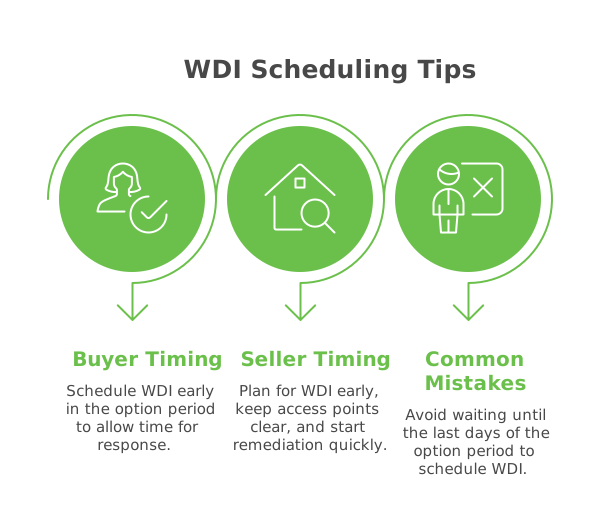
Buyer timing during the option period
In Texas, the buyer often uses the option period to run inspections and decide whether to move forward. The Texas Real Estate Research Center explains that the termination option period is a negotiated number of days after the contract is effective, during which the buyer can terminate for any reason and receive earnest money back (subject to contract terms) (Texas Real Estate Research Center).
Practical takeaway:
- If the buyer orders WDI late in the option period, there is less time to respond.
- If the seller waits to address access or known issues, the timeline tightens fast.
Seller timing: the simplest playbook
For many Austin sellers, the least stressful route is:
- Plan for WDI early, even if you do not think you have termites.
- Keep access points clear so the inspection is not delayed.
- If the report flags something, start remediation steps quickly.
You do not have to overcomplicate it. Early inspection equals more options.
Common timing mistakes that cause closing pain
- Waiting until the last days of the option period to schedule WDI
- A packed garage blocking inspection areas
- An attic hatch that is painted shut or buried by storage
- A seller hoping the issue “does not come up”
What the inspector typically looks at in a single family home
A WDI inspection focuses on accessible areas where evidence is commonly found.
Common areas include:
- Garage edges and slab transitions
- Baseboards and trim near exterior walls
- Plumbing penetrations under sinks and around water heaters
- Visible framing areas and accessible attic entry points
- Exterior perimeter and spots where soil meets the structure
Seller prep tip: If you want a cleaner report and fewer questions, make the home easy to inspect.
How to read a Texas WDI report without overreacting
A WDI report can feel technical, but you can translate it into three buckets.
Bucket 1: Evidence of active infestation
This is the one that usually triggers urgent next steps.
Bucket 2: Evidence of previous infestation or damage
This can affect negotiations depending on whether treatment is documented and whether repairs are needed.
Bucket 3: Conditions conducive to infestation
This is the “risk factors” section. It is often where you see notes about moisture, wood contact, or access issues.
Remember, even the official Texas form states the inspection is limited to what is visible and accessible, and it does not cover conditions not visible at the time of inspection (Texas Department of Agriculture).
Common lender related needs (high level and deal friendly)
Some buyers will ask for WDI because their loan type or lender guidelines push them in that direction.
VA loan related note
The VA publishes local requirements that list where wood destroying insect information is required, and Texas is included in the states where it is required statewide (VA Home Loans).
FHA related note
HUD guidance for pest control states that FHA requires inspection only if there is evidence of active infestation, if mandated by state or local jurisdiction, if customary to the area, or at the lender’s discretion (HUD Archives).
Important: Each lender can still have overlays or extra documentation preferences, so the safest move is to schedule early and be ready to respond.
Remediation workflow if the report flags termites or damage
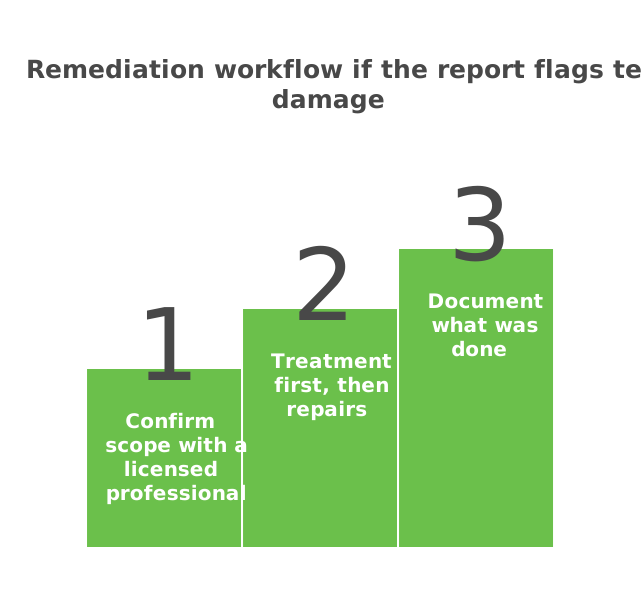
If the WDI report brings up a concern, the key is to follow a clean, repeatable workflow.
Step 1: Confirm scope with a licensed professional
Get a clear plan that matches what was found and where.
Step 2: Treatment first, then repairs
If there is active infestation, control comes before cosmetic repair. This keeps you from covering up evidence and having to redo work.
Step 3: Document what was done
Keep treatment records and any follow up notes together with the transaction paperwork.
Seller and Realtor prep checklist for smoother WDI outcomes
Use this the day before inspection day.
- Clear access to attic hatch and garage perimeter walls
- Move stored items away from exterior walls and water heater closets
- Trim vegetation touching the home and clear soil buildup against the foundation line
- Make sure gates and side yards are accessible
- Have any prior treatment records ready if they exist
See what our happy customers are saying! Read real reviews and discover why homeowners trust us.
Next step: book our termite control Austin
If you are a seller or Realtor trying to keep the deal on track, book our termite control in Austin. We can help with WDI inspections, clear documentation, and fast next steps if the report flags a concern.
FAQ (Apartment Owner Edition)
1) How early should sellers schedule a WDI in Austin?
As early as possible is best, because it gives everyone time to review the report and respond without rushing. Early scheduling also lowers the odds of running out of time during the option period.
2) What is the option period and why does WDI timing matter?
The option period is the buyer’s due diligence window, and it is when many specialty inspections happen. If WDI is scheduled late, there may not be enough time for treatment documentation or negotiations before deadlines.
3) What does a Texas WDI report actually say and what are its limits?
It documents visible evidence and conditions that can increase risk, but it is limited to what is visible and accessible at the time of inspection. That is why access prep matters and why a clean report does not guarantee there is zero hidden damage.
4) If a report shows termites, what happens next in the transaction?
Typically the parties confirm scope, complete treatment if needed, and document what was done. The goal is to resolve the issue with clear records so the deal can keep moving.
5) What are the most common items that cause delays in WDI related negotiations?
Late scheduling and poor access are big ones, plus unclear documentation after treatment. When WDI is ordered early and the home is easy to inspect, timelines are usually easier to protect.